
How To Let Go of Resentment?
I'll first start with why you want to let go of resentments. And maybe even why you hold onto them, too.
Resentment is the equivalent of emotional indigestion; you pay the price of chronic stomachaches for eating bad seafood once.
Like a multi-layered poop cake, the shit is just piled on top of itself.
Yummy!
The cost is your sense of freedom and connection to self, others, and a power greater than yourself (for me, this has roots in nature).
So, why do we hold onto the anger, frustration, and irritation associated with resentments?
What rings true for me has also shown up in my work with clearing my space, decluttering, and the workshop I'm leading next week.
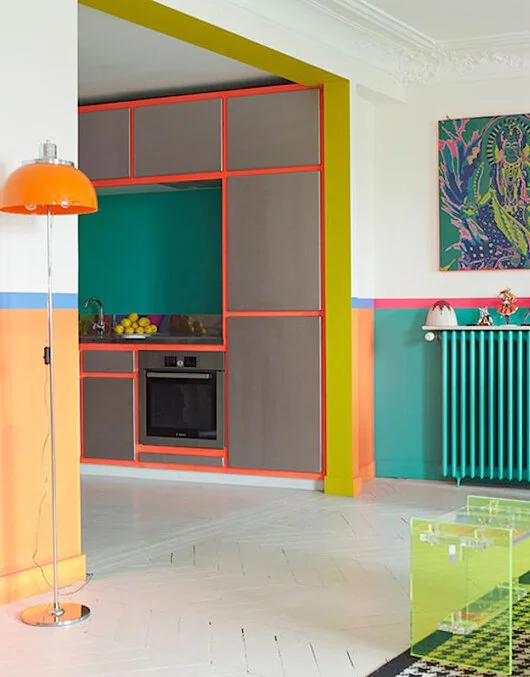
Manish Arora’s home in Paris.
Resentment can act as a placeholder for joy and protection in light of loss.
I held onto resentments because it kept the people, places, and things I loved, alive.
I could hold them in anger. I could not hold them in their physical absence.
Once alive, resentments can act as validation, connection, and even an innocent-enough habit of escaping the present.
The anger towards your former best friend fuels the replaying of your breakup in your mind. As you think of that loss, you feel closer to that person.
The irritation at your client for paying you late, again. You mull over it in your head and feel justified for the snarky email you later send.
The frustration you feel at losing a business deal. You turn it inward to beat yourself up.
Resentments are deeply linked to people and your relationship with them.
It's visceral and primordial, stirring up ancient memories of a need to be in a community for safe harbor, nourishment, and a sense of place in society.
In most cases, our lives depend on our connection to others. Our grocers, doctors, subway operators, coworkers, friends, and families all provide us with necessary services.
Even during a pandemic. Even in relative or extreme isolation. Many someones ensure your electricity functions. Food still makes it to your door. The mail appears in your mailbox.
People help make the human world go 'round.
When we live from a place of deep resentment, we live in isolation. We're cut off from a sense of belonging, a primordial security blanket that dwells deep within our cells.
No matter if you are in a Zoom room of 100 people, you are cut off from the inside. Resentment is rust around the wiring of your heart, short-circuiting the electrical impulses of love, belonging, and rest.
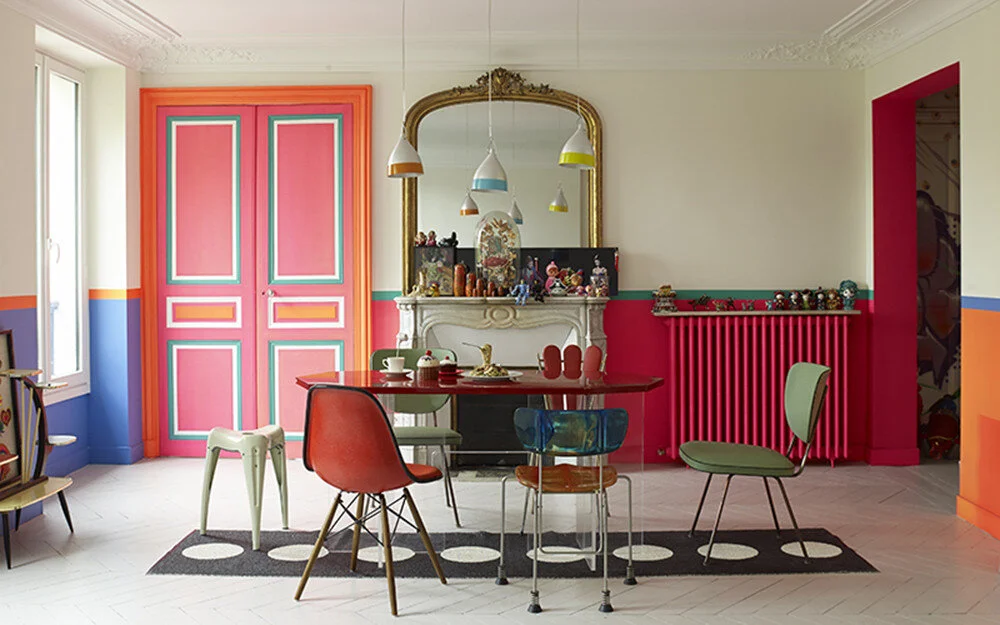
Manish Arora’s home in Paris.
If you live with resentments, you most certainly don't feel like you belong. And the likelihood is that you act this out, daily.
You are denied of life's basic promise as a living, connected species, linked in fact to your environment and vice versa: you deny yourself the right to be.
To belong.
To become.
To believe.
On a deeper level, resentment boils over and leads to self-destructive behavior.
You act out, hide or avoid.
In short, you suffer.
Ok, but how do I let go of resentments?
Here are a few ideas of where to start with resentment.
1. Determine: Are you angry now or about the past?
Knowing what you are mad about can help you to understand how to approach the situation.
If you’re mad about the past, it’s resentment. The cure is an admittance of the full nature of the resentment on all parts, forgiveness and to stop adding to the stockpile of repressed frustrations.
If you're mad about something happening right now, it's an invitation for awareness, a boundary, and/or change in behavior on your part.
The behavior change is not to make the situation continue as is or make someone else feel better. It's to take responsibility for what's important to you, act upon it, and thus eliminate the need for your forgiveness later.
2. Review your living space, especially acknowledging where you sleep.
Your living space is a reflection of your inner world. Take a look around. What do you see? Feel? What are you carrying?
On a literal level, you may be carrying resentment reminders in the form of pictures, old gifts from ex-lovers, and clothes reminiscent of dreams you've since buried.
“I don’t always know how I feel, but I can always look at my home and use it as a gentle reflection of my inner world. ”
I don't always know how I feel, but I can always look at my home and better understand it as a map to my insides.
Unprocessed, sad items weigh on us. Fester. Boil and belch under the surface of our facades.
For everyone to see us, as we are, or rather as we feel authentically, it's imperative we pull back the mask, look at our past, in our present, and say I see you. I meet you. And when it's time, graciously release you.
3. Begin to let go.
I’m hosting a free, 2-part workshop series on clarity. I’ll address how to gently identify what, when, and how to let go of what's holding you back. It’s inspired by Marie Kondo’s book *The Magical Art of Tidying Up* and my own magic. Learn more and register, here.
And as always, thanks for being here.